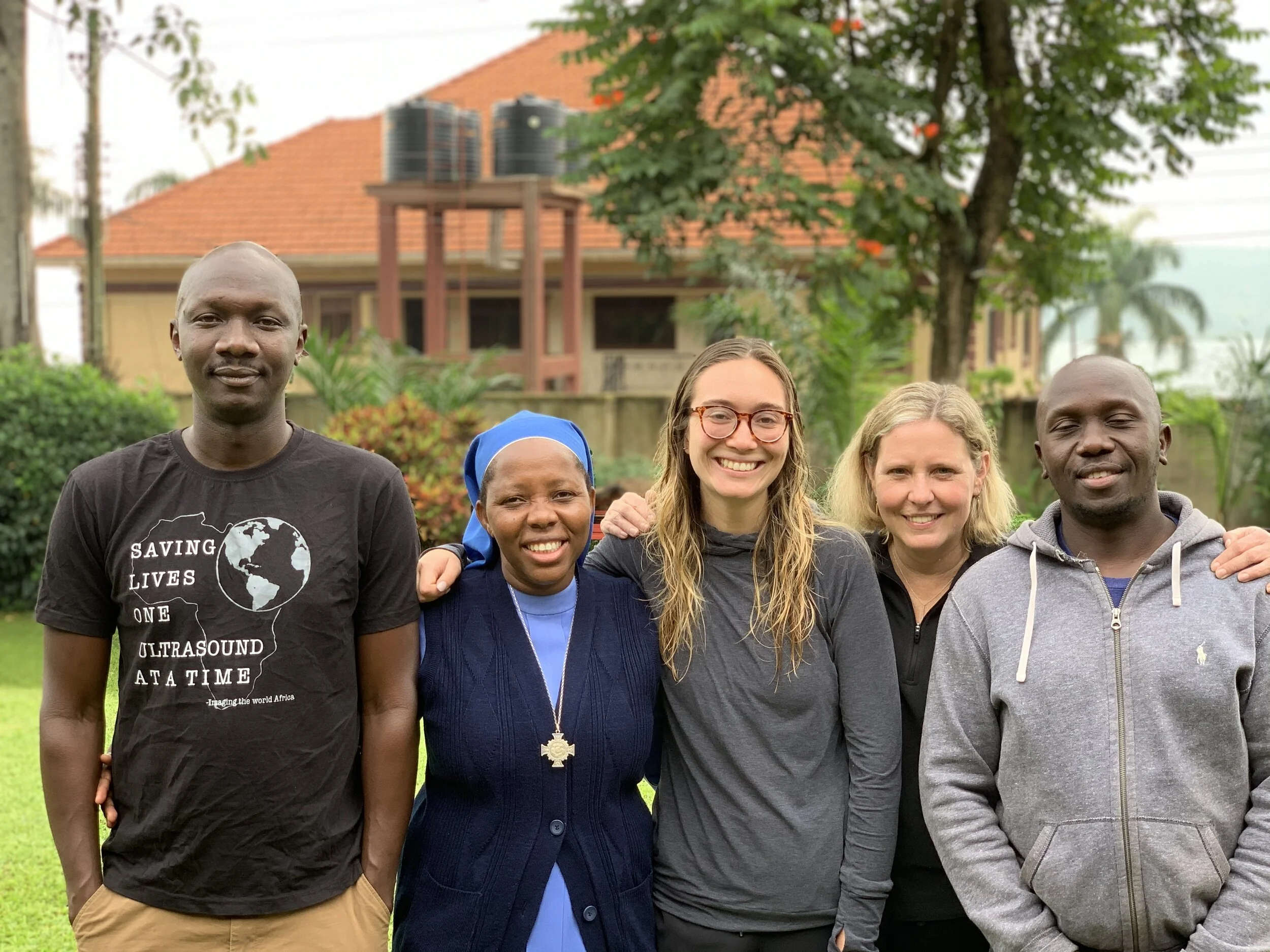
Day in the Life: Uganda Journal from ITW Intern, Zoe Adams
Introduction
In the summer of 2009 I had the opportunity to travel to Uganda with some of the Imaging the World (ITW) founding team as the organization began work in Africa. Following my trip to Uganda, as a senior in high school, I continued my work with ITW by helping to prepare and test sweep protocols and develop associated training materials for a high school graduation project.
Since that initial visit to Uganda over a decade ago, ITW has worked to reshape rural healthcare by integrating low-cost ultrasound programs into remote health care facilities that often lack radiologists and other skilled personnel, not to mention diagnostic imaging equipment. Using commercially-available portable, hand-held devices that are easily procured, easy to learn, and easy to teach, ITW has performed over 300,000 scans in Uganda, about 23% of which have resulted in referrals to specialized care.
In those ten years, as ITW expanded their sustainable model across Uganda, I entered college and then the workforce, always inspired by ITW to pursue an education and career in public health and international development. This fall, as I neared the completion of my Master’s in Public Health degree, I was serendipitously offered the chance to return to Uganda as a graduate student intern with ITW. Thus, working with ITW has allowed me to bookend my educational journey.
These short journal entries serve as a way to outline what my recent trip to Uganda with ITW entailed, highlight what I learned from my time abroad, and reflect on my experience working with ITW both past and present.
Saturday December 7, 2019
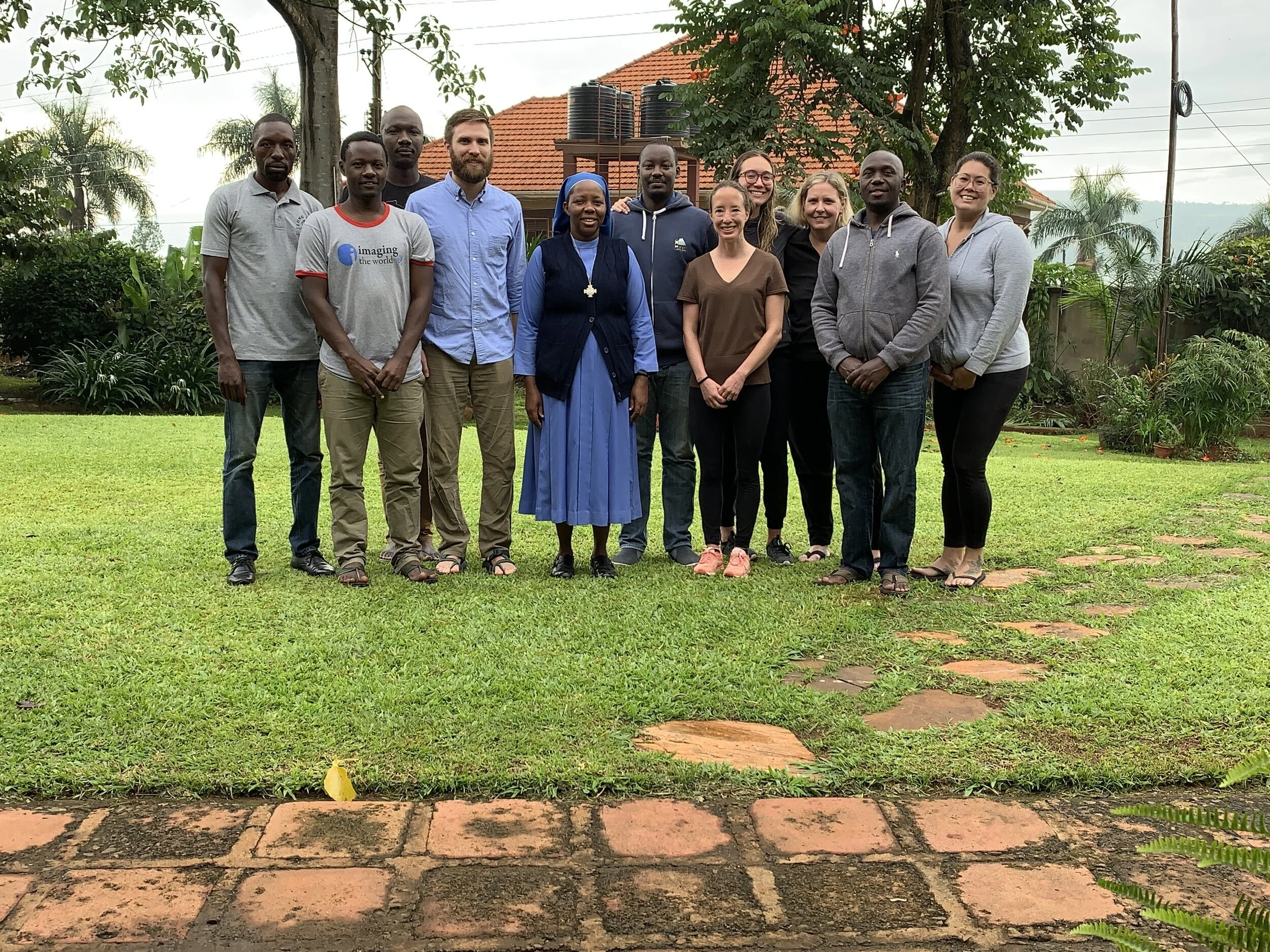
After over 24 hours of travel, the sun shining outside the Entebbe Airport was a welcome sight. Picho and Renny, two members of the ITWA team, picked up myself and fellow travelers from the University of Vermont: Dr. Delia Horn, a neonatologist, and Dr. Will Williams, an OB/GYN. As we made our way to the ITWA office in Kampala the rural farmland quickly transitioned into bustling streets and marketplaces. The first night in Kampala was comfortable and calm. The ITW/ITWA team shared a tasty homemade meal of rice, chicken, peas, and chapati as we got to know each other and learned about the various projects and plans for the following week. Best of all, for dessert we had juicy, sweet pineapple, a treat that I had been dreaming about since I had last been in Uganda.
Sunday December 8th, 2019
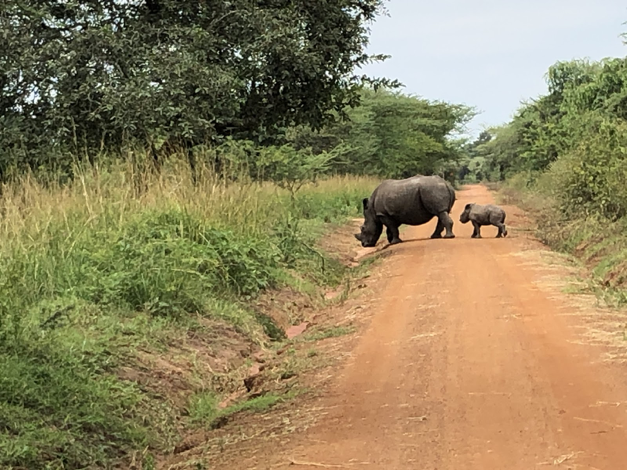
After a relaxing night at the ITWA office, our group hit the ground running early this morning. The day was jam-packed with activities and planning as we made the five hour journey from Kampala to Gulu in Northern Uganda. With a bit of extra time on our hands, the group spontaneously decided to stop by the Ziwa Rhino Sanctuary to see the only wild rhinos in Uganda. After being poached to extinction in the early 1980’s, rhinos are now being reintroduced to Uganda through a sustainable breeding program run by Rhino Fund Uganda. Upon arrival, our rhino sanctuary guide told us that we would be lucky to see more than one rhino during the trek, so we were shocked and excited to come across four adult rhinos munching on some grass, along with a mother and baby rhino duo crossing the road! After the rhino trekking adventure we continued our journey to Gulu and made our first stop at St. Mary’s Hospital Lacor Campus (Lacor Hospital). Lacor Hospital is a sprawling medical campus that serves much of the population in Gulu district, and receives referrals from several rural clinics where Imaging the World serves. On average, Lacor Hospital hosts about 2,000 individuals a day (including patients and caretakers), and is considered one of the best hospitals in Uganda. As some members of the team broke off to conduct ultrasound training for the “shoulder project”, others of us were lucky enough to receive a comprehensive tour of Lacor Hospital campus to better understand the many services that the facility offers.
Monday December 9th, 2019
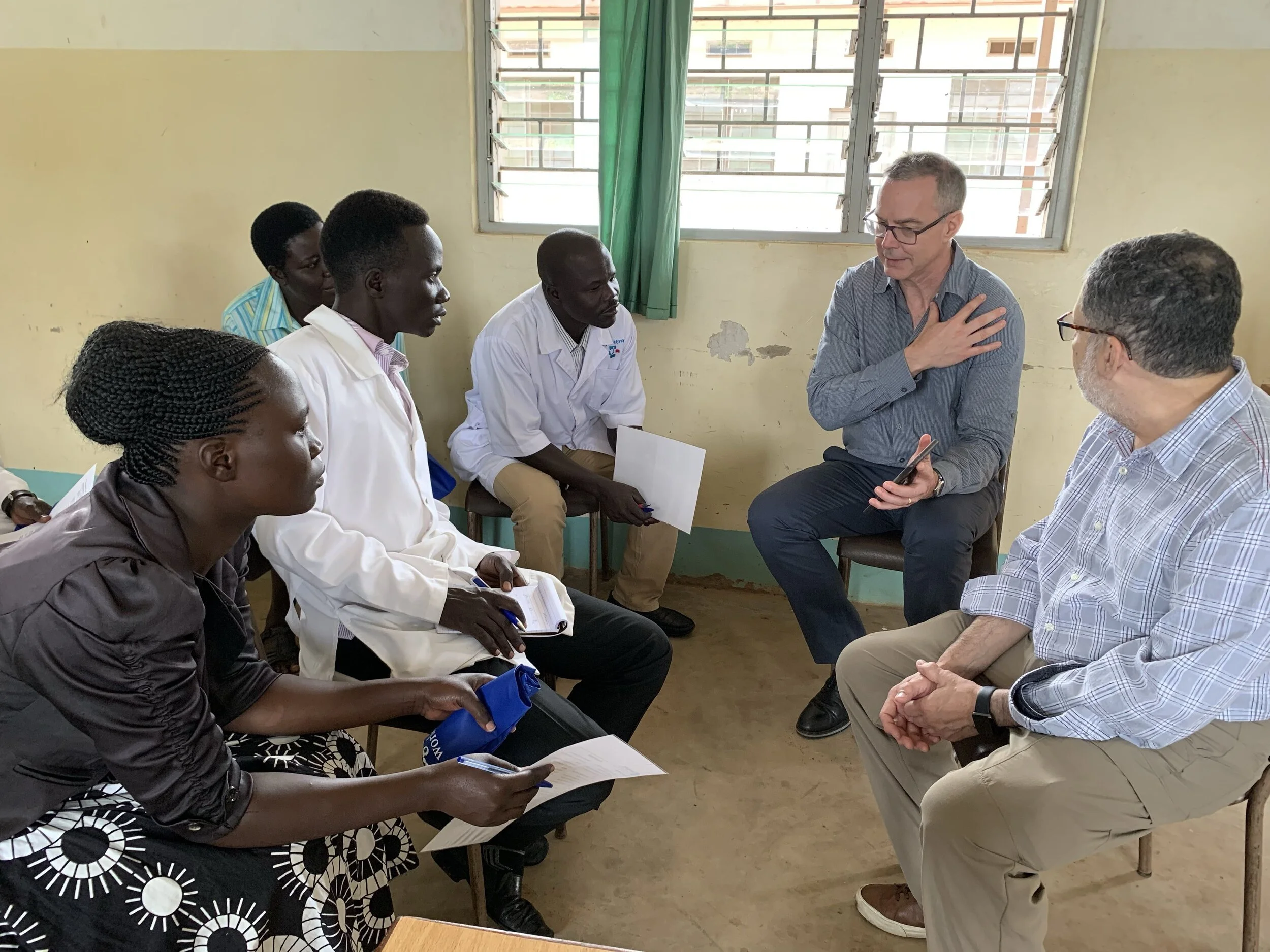
While some members of the team returned to Lacor Hospital to continue work on shoulder ultrasound training, Dr. Horn led another group to one of the rural Health Centre III’s for neonatal resuscitation training. Health Centre III facilities are rural clinics staffed by nurses and midwives organized like a hub and spoke system whereby the rural clinics have the capability to do many basic interventions, and can refer patients to another medical care facility (in this case, Lacor Hospital) for patients that require additional resources and medical expertise.
Dr. Horn’s neonatal resuscitation training is based on a program called “Helping Babies Breathe” (HBB). The HBB program is unique as the resuscitation steps were designed specifically for low-resource settings such as rural health clinics. The techniques outlined in the educational materials focus heavily on providing care during “the Golden Minute” of a newborn’s life, and take into consideration the limited human and technical resources available. The nurses and midwives were eager to go through the HBB training, as they reported hundreds of births a month, of which roughly 10% require resuscitation. A bonus of attending the documenting the training was that I had the opportunity to learn how to properly suction and provide ventilation through a bag valve mask to a newborn!
Tuesday December 10th, 2019
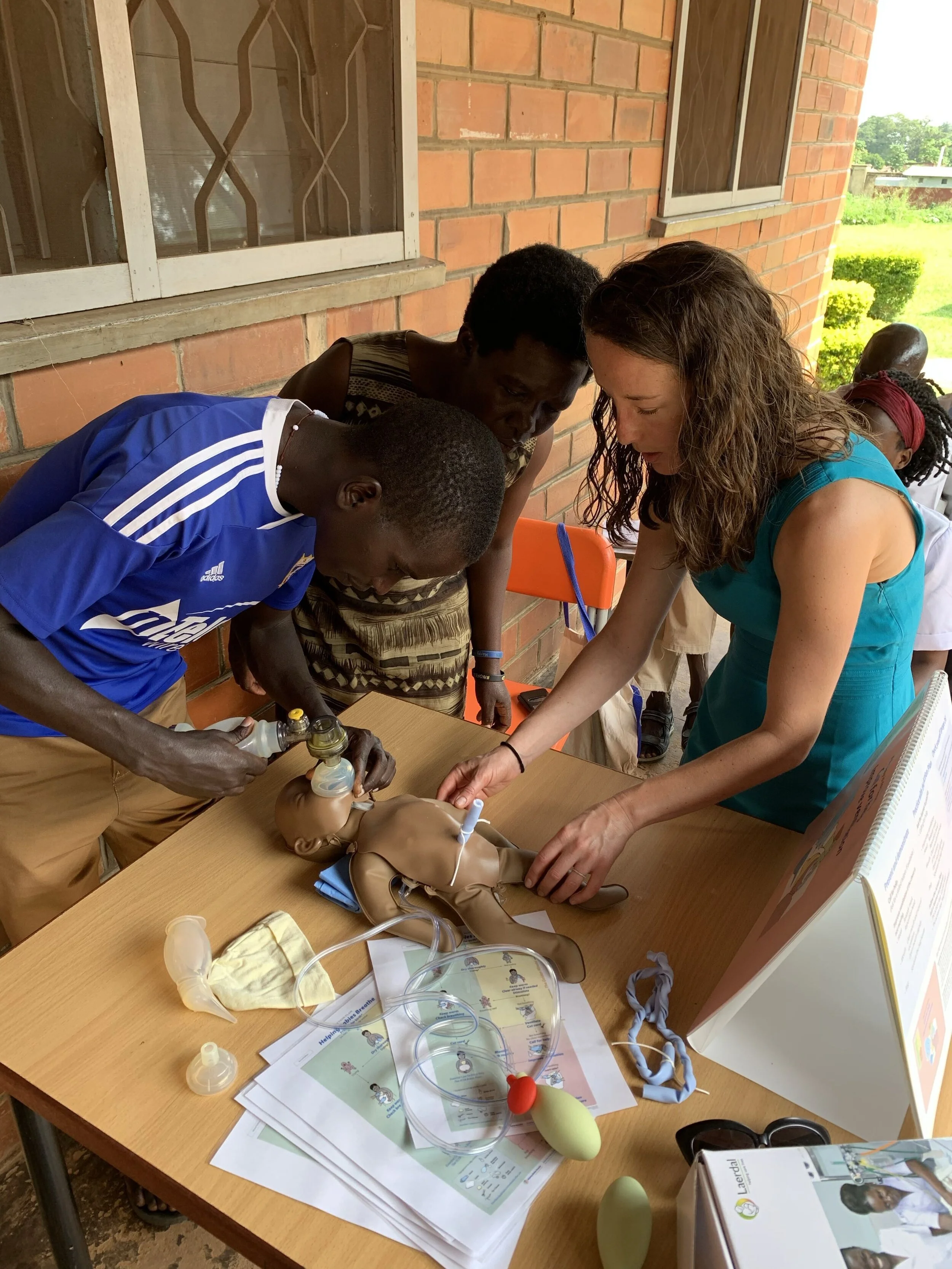
The team hit the road for two clinic visits today at two of the other Health Centre III sites. Though all of the clinics are associated with Lacor Hospital in Gulu, it is clear that each facility serves a unique population and has its own organization in terms of resources, staffing, and more.
Activities today included teaching clinic staff members about at-home shoulder therapies to recommend to patients reporting shoulder pain, more HBB programming from Dr. Horn, and checking in with Imaging the World trainees about their experience and discussing and addressing obstacles that they are facing. One challenge faced by Imaging the World Africa is emphasizing the importance of complete and accurate data collection to nurses and midwives who already have a lot of work to do. Renny, the data coordinator for ITWA, spent time at the clinic visits reviewing proper data entry protocol. Renny just received his MPH degree, so we spent the evening celebrating with the team over a delicious curry dinner!
Wednesday December 11th, 2019
After one last visit to Lacor Hospital for some final meetings in Gulu, myself, Angelia, Picho and Delia broke off from the rest of the group to head towards Murchison Falls National Park for an evening of relaxation by the Nile River and an early morning game drive. One amazing thing about ITW is that the organization recognizes the time and energy that volunteers put into their work, and encourages visitors to take advantage of the incredible touristic and cultural opportunities available in Uganda while in-country. The drive to the park was incredible; we were able to watch the environment change from green forest and rolling hills to tall grasses and savannah. Meanwhile, the homes and structures slowly transitioned from brick buildings with metal roofs to circular huts with thatch roofs. Our accommodations for the night sat directly on the Nile River, so we spent the afternoon and evening taking in the beautiful views and keeping our eyes peeled for rogue hippos and crocodiles.
Thursday December 12th, 2019
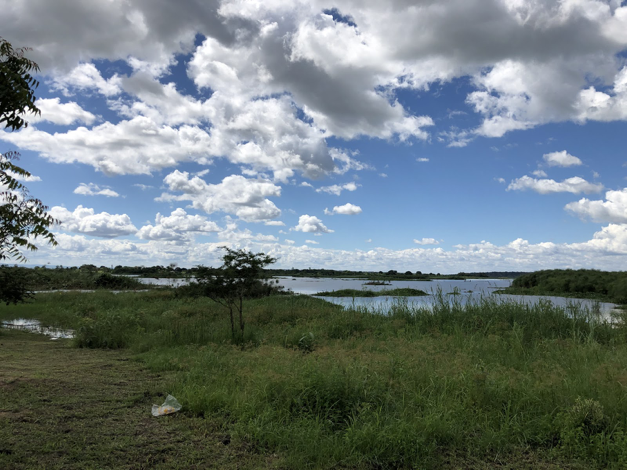
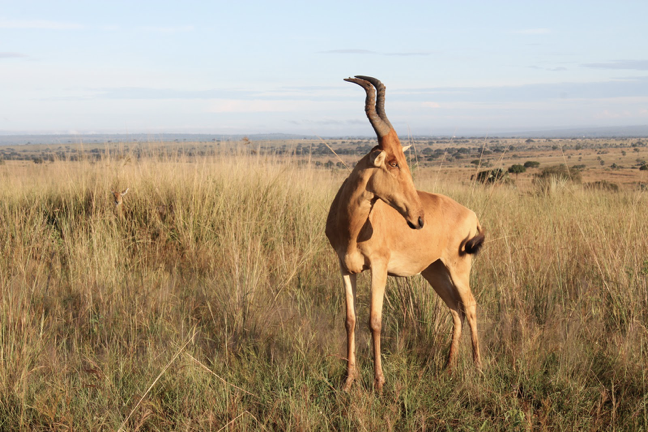
Today we rose at 5am for a quick breakfast before loading into an open-air truck for the morning game drive. As we entered the park we watched the sun rise over the savannah, turning the sky purple and pink as different types of antelopes, gazelles and monkeys leapt through the grass. The park is huge, and as we drove along we learned about all the different species that call the park their home. Over the course of the game drive we were lucky to spot a lion chasing a group of hyenas from afar, we witnessed all kinds of monkeys and baboons, giraffes, elephants, water buffalo, and even saw a few warthogs. It was truly a once in a lifetime experience to be able to view all of the wildlife that Uganda has to offer so intimately.
Friday December 13th, 2019
After a long drive back to the ITWA office in Kampala from Murchison Falls last night, the team hit the road early this morning to head towards Kamuli District in eastern Uganda to visit the site of the first ITW clinic where prenatal ultrasound services were implemented. This site visit was particularly inspiring, as this clinic has truly taken full advantage of the opportunities that the ITW model provides; demonstrating a great example of how the ITW model can work.
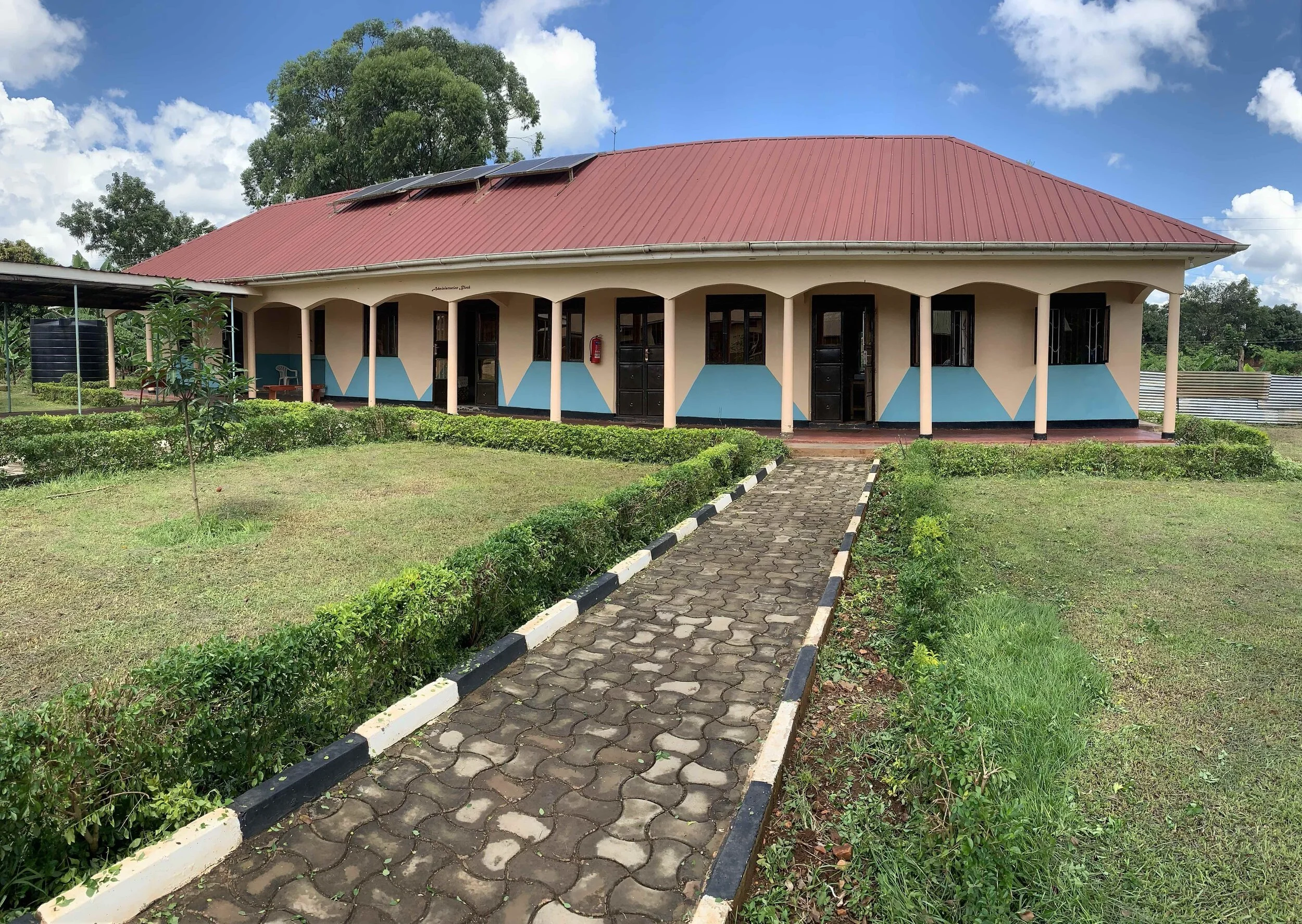
Through revenue collected from ultrasound scans, the clinic was able to build an entirely new wing of the facility to expand administrative capacity, and they were able to pay for updates to their ambulance as well. While visiting the clinic, we had the opportunity to meet a former patient who had breast cancer diagnosed and treated thanks to the ITW breast cancer scan pilot program. Witnessing the incredible impact that ITW has had on this community and health facility was truly inspiring, and clarified for me the importance of continuing to expand the ITW model to improve population health and expand resources and capabilities of rural clinics across the globe. After a day of work in the clinics, our team opted to stay the night in Jinja, a small city that sits right on the source of the Nile River for our last night together in Uganda. We spent the evening enjoying food together and reflecting on the incredible work that we had done over such a short period of time.
Final Reflections
I feel overwhelmingly grateful to have had the opportunity to witness firsthand the incredible work that ITW is doing to improve health and expand diagnostic imaging capabilities in rural Uganda. More than that, it was amazing to compare my initial experience in Uganda ten years ago to now; I am astonished and impressed by how far ITW has come and how much the organization has expanded and learned from over a decade establishing and expanding the ITW model in Uganda. While reading materials online or seeing pictures and short clips of ITW’s work is inspirational, being able to visit the clinics and witness how necessary and important the establishment of diagnostic imaging access is to these rural communities has been a completely different experience. I feel so proud to have played a small part of what ITW has done so far to improve health in Uganda, and I can’t wait to see what happens next as the organization’s work continues to expand in scope and location.